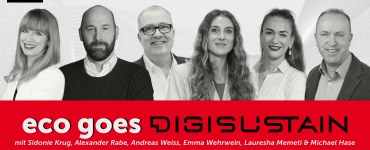
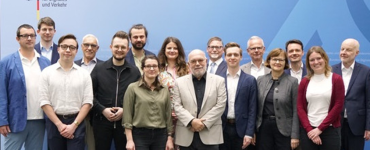
dotmagazine CSA Email Summit 2024: Trust is the Foundation for a Successful Email Ecosystem Learn moreAn Initiative to Fight DNS Abuse With more than 1,000 members, eco is the largest Association of the Internet Industry in Europe. These members trust our work: Benefit as a member too! Arista Networks GmbH enclaive GmbH SSC-Services GmbH GOLDBECK Südwest GmbH NameBlock AS All members Current News eco press release eco Survey: 9 Out of 10 Germans Use the Internet to Prepare Their Voting Decisions People are increasingly preparing their voting decisions online: Approximately 90 per cent of Germans (88.2%) use digital services to learn about party programmes, as well as candidates. 18.04.2024 eco eco Helps Shape Future Topics at DIGISUSTAIN 2024 Based on the 17 UN Sustainable Development Goals, approximately 300 speakers will share and discuss their expertise in the areas of sustainability and digitalisation on 17 stages at this year’s DIGISUSTAIN on 29-30 April 2024. 16.04.2024 Domains IGF-D Restructures and Establishes an Association for Internet Governance On 8 April 2024, numerous representatives of various stakeholder groups gathered at the German Federal Ministry for Digital and Transport Affairs (BMDV) to re-found the IGF-D in a hybrid format. eco Association has been involved in the IGF-D since its foundation over 20 years ago, based on its active representation of the Internet industry. 16.04.2024 Security 3 Questions for Carina Franke, G DATA Recruiting suitable IT specialists is becoming increasingly difficult, and this also applies to IT security. In this interview, Carina Franke, Team Leader Recruiting at G DATA CyberDefense AG, provides tips on new approaches in personnel strategy that can be used to counter this trend. 15.04.2024 Policy & Law Vivien Witt for eco on the Board of the European Internet Forum (EIF) Vivien Witt has joined the Board of the European Internet Forum (EIF). At eco, she holds the position of international stakeholder management and strategic partnerships. For the next three years, she will be responsible for the EIF's administrative, financial and human resources matters as a Board Member. 11.04.2024 eco press release eco Survey: Four Out of Five Germans Say Digitalisation Makes Rural... Around four out of five Germans (80.4 per cent) believe this, according to a representative survey conducted by the market and opinion research institute Civey on behalf of eco – Association of the Internet Industry. 11.04.2024 Show all News Many Forego Cloud Backups 43% Around One in Two (43%) Completely Forego Cloud Backups Source: Survey of 2,517 Germans in March 2024. More on the Figures of the Week dotmagazine dotmagazine is an e-magazine on Internet industry topics, showcasing the wealth of experience and knowledge of the eco Association and its members and partners across the entire bandwidth of the Internet industry. ABOUT DOTMAGAZINE dotmagazine Editorial Calendar 2022 Tips, Discussions and Know-How Orientation, Information and practical tips for how to optimally harness digitalisation in these turbulent times. On this site, you'll find an overview of content offered by eco on the topic of Covid-19. Next Events Online 30.04.2024 RDRS - How to access WHOIS data today Online 02.05.2024 topDNS Best Practice Webinar: A partnership to empower domain... Online 26.06.2024 ICANN80 Readout – Highlights & Take-Aways from the Policy... Online 26.11.2024 ICANN81 Readout – Highlights & Take-Aways from the Annual... Show all Events eco Newsletter × Newsletter registration failed. A profile change request has been sent to the affected person Your update on the Internet industry News and Events from eco Association Email Address E-Mail-Adresse Wdh dotmagazine (once a month, English) eco european (every six weeks, English) eco weekly (weekly, German) eco politik digital (twice a month, German) Data protection: Yes, I would like to receive the newsletter(s) and mailings on the selected topics. The newsletters are ordinarily sent out in the intervals indicated above. My data may only be passed on within the framework of the eco privacy policy. I can revoke my consent at any time with effect for the future by emailing datenschutz@eco.de or by using the “unsubscribe” link in every email.